
SensoLyte® Anti-Mouse MOG (1-125) IgG Quantitative ELISA Kit Colorimetric - 1 kit
- Cat.Number : AS-55156
- Manufacturer Ref. :
-
Availability :
In stock
- Shipping conditions : Ice fees will apply
Alternative choices

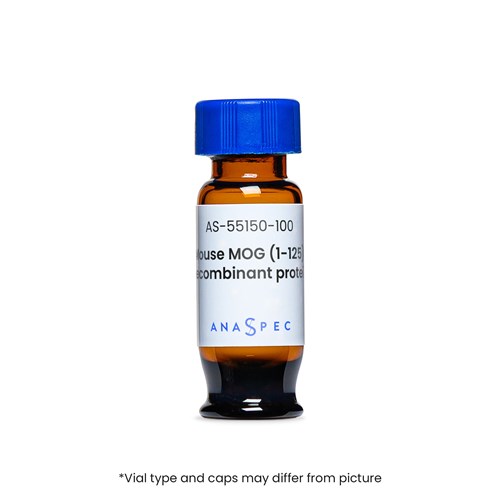
Mouse MOG recombinant protein (1-125) [Cat# AS-55150] is able to induces autoantibody production and relapsing-remitting neurological disease causing extensive plaque-like demyelination. Autoantibody response to mouse MOG (1-125) has been observed in induced experimental autoimmune encephalomyelitis (EAE) in C57/BL6, 129/Sv, B6, and SJL mice.
The SensoLyte® Anti-Mouse MOG (1-125) IgG Quantitative ELISA Kit provides a convenient quantitative assay for anti-mouse MOG (1-125) autoantibody. This colorimetric assay is useful to researchers for determining the amount of anti-mouse MOG (1-125) antibody present, and can help provide information on the role it plays in the development and treatment of EAE, an animal model for multiple sclerosis pathogenesis.
Specifications
| Packaging | |
| Kits components |
|
|---|---|
| Chemistry | |
| UniProt number |
|
| Storage & stability | |
| Storage Conditions |
|
| Activity | |
| Application | |
| Biomarker Target | |
| Detection Method | |
| Detection Limit |
|
| Research Area | |
| Sub-category Research Area | |
| Usage |
|
| Source | |
| Host | |
Downloads
You may also be interested in the following product(s)
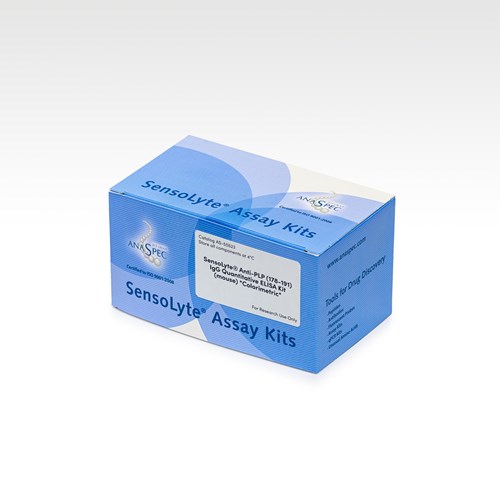
SensoLyte® Anti-PLP (178-191) IgG Quantitative ELISA Kit (mouse) Colorimetric - 1 kit
Citations
MHC class II–dependent B cell APC function is required for induction of CNS autoimmunity independent of myelin-specific antibodies
J Exp Med . 2013 Dec 16 ; 210 2921 | DOI : 10.1084/jem.20130699
- N. Molnarfi
Substrain Differences Reveal Novel Disease-Modifying Gene Candidates That Alter the Clinical Course of a Rodent Model of Multiple Sclerosis
J Immunol . 2010 Feb 19 ; 184 3174 | DOI : 10.4049/jimmunol.0902881
- L. Summers de Luca
Complement-associated loss of CA2 inhibitory synapses in the demyelinated hippocampus impairs memory
Acta Neuropathologica . 2021 Jul 25 ; 142 643 | DOI : https://doi.org/10.1007/s00401-021-02338-8
- V. Ramaglia
- et al
Siponimod therapy implicates Th17 cells in a preclinical model of subpial cortical injury
JCI Insight. . 2020 Jan 16 ; 5(1) e132522. | DOI : 10.1172/jci.insight.132522
- LA.. Ward
- et al
References
B cells are critical to induction of experimental allergic encephalomyelitis by protein but not by a short encephalitogenic peptide
European J Immunol . 1999 Nov 01 ; 29(11) 3432 | DOI : https://doi.org/10.1002/(SICI)1521-4141(199911)29:11<3432::AID-IMMU3432>3.0.CO;2-2
- J-A. Lyons
- et al
The Structure and Function of Myelin Oligodendrocyte Glycoprotein
Journal of Neurochemistry . 2002 Jan 18 ; 72(1) 1 | DOI : https://doi.org/10.1046/j.1471-4159.1999.0720001.x
- T.G. Johns
- CC. Bernard
Structure and Function of the Myelin Proteins: Current Status and Perspectives in Relation to Multiple Sclerosis
Current Medicinal Chemistry . 2005 Jan 01 ; 12(13) 1569 | DOI : https://doi.org/10.2174/0929867054039026
- A.G. Tzakos
- et al