
Beta-Amyloid (11-25) - 1 mg
- Cat.Number : AS-62884
- Manufacturer Ref. :
-
Availability :
In stock

This amino acids 11 to 25 fragment of b-amyloid is capable of forming well-organized amyloid fibrils in vitro, similar to the pathogenic ones found in amyloidosis. Analysis of the structural properties of one monomer of b-amyloid (11-25) as well as of the aggregation mechanisms for four chains of b-amyloid (11-25) showed that the system assembles rapidly into a random globular state that evolves into three- and four-stranded antiparallel beta-sheets. The aggregation process is considerably accelerated by the presence of preformed dimers.
Pyroglutamyl (pGlu) peptides may spontaneously form when either Glutamine (Q) or Glutamic acid (E) is located at the sequence N-terminus. The conversion of Q or E to pGlu is a natural occurrence and in general it is believed that the hydrophobic γ-lactam ring of pGlu may play a role in peptide stability against gastrointestinal proteases. Pyroglutamyl peptides are therefore considered a normal subset of such peptides and are included as part of the peptide purity during HPLC analysis.
Specifications
| Chemistry | |
| Sequence one letter code |
|
|---|---|
| Sequence three letter code |
|
| Molecular Formula |
|
| Molecular Mass/ Weight |
|
| Modification | |
| Conjugation |
|
| Quantity & Purity | |
| Purity |
|
| Storage & stability | |
| Form |
|
| Storage Conditions |
|
| Activity | |
| Biomarker Target | |
| Research Area | |
| Sub-category Research Area | |
| Usage |
|
| Source | |
| Source / Species |
|
You may also be interested in the following product(s)
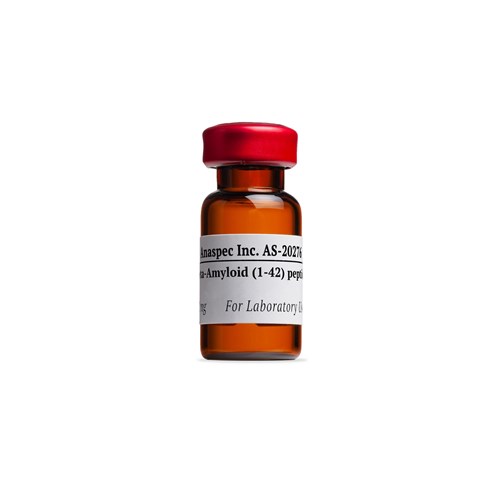
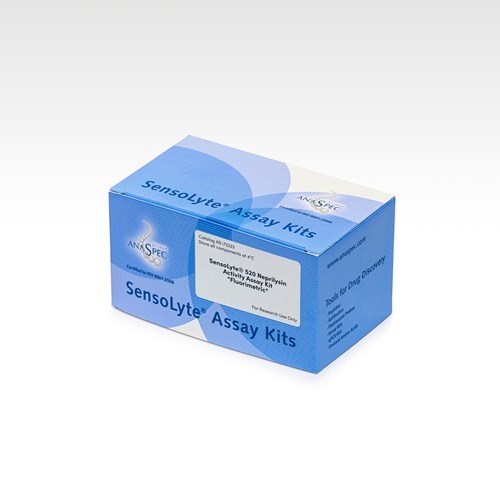
SensoLyte® 520 Neprilysin Activity Assay Kit Fluorimetric - 1 kit
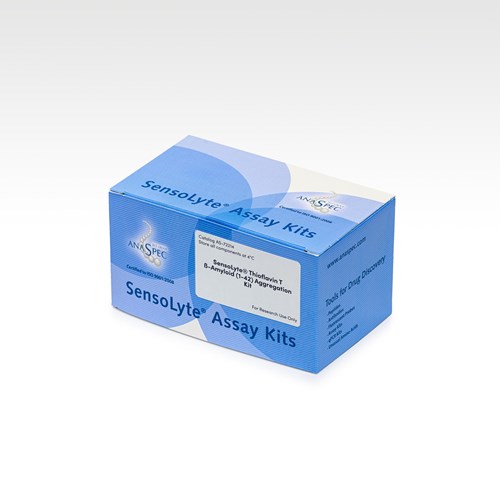
SensoLyte® Thioflavin T ß-Amyloid (1-42) Aggregation Kit - 1 kit
References
A Molecular Model of Alzheimer Amyloid β-Peptide Fibril Formation
J Biol Chem . 1999 Mar 01 ; 274(18) 12619 | DOI : https://doi.org/10.1074/jbc.274.18.12619
- L. Tjernberg,
- et al
Aggregating the amyloid Aβ11–25 peptide into a four-stranded β-sheet structure
Proteins . 2006 Dec 01 ; 65 877 | DOI : https://doi.org/10.1002/prot.21134
- G. Boucher
- et al