Custom peptides synthesis
Cyclic Peptides
AnaSpec specializes in custom synthesis of cyclic peptides — including lactam, disulfide-bridged, stapled, and other constrained scaffolds — from research to GMP grade.

Milligram to
Kilogram
We support every stage of your product life cycle with flexible scales.

Research to GMP grades
Up to 95% purity for research grade and 98% for GMP grade.

Cyclization strategies
We manufacture an array of cyclic peptide scaffolds and modifications.

About Cyclic Peptides
Cyclic peptides are constrained peptide structures formed by covalently linking two ends of a peptide chain, or by introducing intramolecular bridges.
This ring closure enhances stability, cell permeability, and target selectivity, making cyclic peptides valuable scaffolds in research, drug discovery, diagnostics, and peptide therapeutics.
Peptide Cyclization Strategies
AnaSpec custom peptide manufacturing services offer a full selection of cyclic peptide scaffolds in
a range of grades and production scales. Cyclic peptides can be further modified with unusual
amino acids for complete optimization of your peptide.
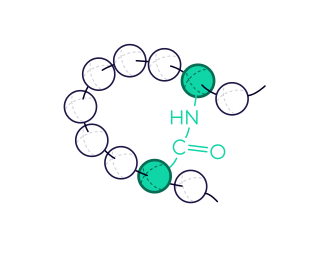
Lactam Rings
Lactam ring peptides are cyclized via lactam bridges between amino (NH2) and carboxyl (COOH) groups within the sequence.
Bridged can be formed between the N and C termini, between two amino acid side chains, or side-chain to terminus.
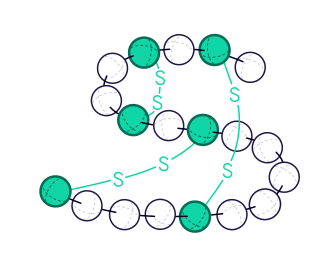
Disulfide Bridges
Disulfide-bridged peptides contain single or multiple intermolecular or intramolecular, disulfide bridges via cysteine residues.
AnaSpec offers oxidative folding and selective cysteine protection for controlled disulfide bond formation.
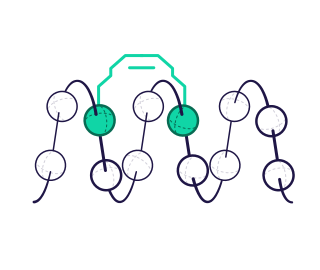
Hydrocarbon Staples
In hydrocarbon stapled-peptides, the “staples” lock α-helical peptides into bioactive conformations, enhancing membrane penetration and protease resistance.
AnaSpec offers “i" and "i+3", "i" and "i+4" or "i" and "i+7" stapling.
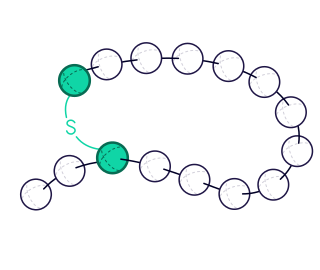
Thioether Bridges
Thioether cyclic peptides are more resistant to reduction and can offer superior stability compared to amide and disulfide bonds.
Thiolactone Bridges
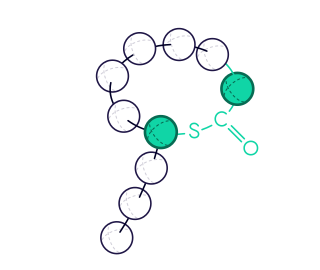
An alternative to disulfide bridges, thiolactone cyclic peptides provide greater stability and design flexibility through the potential for larger rings.
Click Chemistry
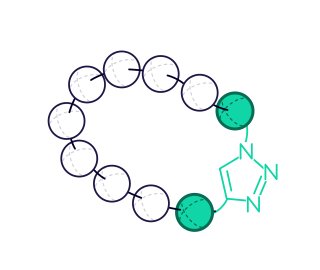
Highly stable triazole cyclic peptides, can be achieved using click reactions such as copper-catalyzed azide–alkyne cycloadditions (CuAAC).